4 Stages of Warehouse Automation in Hong Kong: How B2B Enterprises Can Plan a Step-by-Step, High-ROI Upgrade Path

In today's high-volume operational environment, is "99% picking accuracy" really enough? If your warehouse processes thousands or tens of thousands of orders daily, a 99% accuracy rate means dozens or even hundreds of customers receive incorrect or missing items every day. In a B2B ecosystem, every mis-shipment not only incurs expensive reverse logistics (returns and exchanges) costs but can also damage client trust and lead to critical churn.
Facing Hong Kong's premium industrial rents and intensifying labor shortages, implementing warehouse automation is no longer an optional choice — it is a vital operational strategy for cost reduction, efficiency enhancement and market competitiveness.
This article delves into the four key stages of warehouse automation and explores how enterprises can plan the most cost-effective upgrade route based on their operational scale to maximize ROI.
The 4 Stages of Warehouse Automation Upgrade
Level 1: Basic Digitisation — Transitioning from Paper to Digital Foundations
The first step toward warehouse automation is not blindly purchasing expensive robotics, but establishing a reliable digital foundation. Many enterprises overlook software-level infrastructure when planning smart warehouse solutions. The core of this stage lies in completely eliminating paper-based operations:
- Implementing a Warehouse Management System (WMS): Gain real-time visibility into inventory locations and movement speeds for every pallet and tote.
- Integrating Barcode or RFID Technology: Frontline staff use Personal Digital Assistants (PDAs) instead of paper pick lists, eliminating human errors such as missed items or mis-shipments at the source.
BPS Perspective: Only when inventory database accuracy reaches 100% can downstream hardware automation equipment fully achieve its intended ROI and operational synergy.
Level 2: Partial Mechanisation — Minimising Unnecessary Walking and Optimising Handling Rhythms
Once digital systems run smoothly, the next step is to targetedly reduce manual physical strain and eliminate wasteful walking time for warehouse staff.
For Hong Kong's multi-story industrial buildings, this phase typically introduces lightweight automation equipment:
- Powered Conveyor Systems & Spiral Lifts: Connecting different floors or operational zones to automatically transfer goods toward packing and dispatch areas.
- Pick-to-Light Systems: Guiding workers with light indicators instead of visual searching, accelerating picking speed and throughput.
This strategy enables low-risk, fast-payback upgrades without major alterations to existing racking layouts, making it an ideal stepping stone toward comprehensive automation.
Level 3: High Automation — The Revolutionary Impact of Goods-to-Person (G2P)
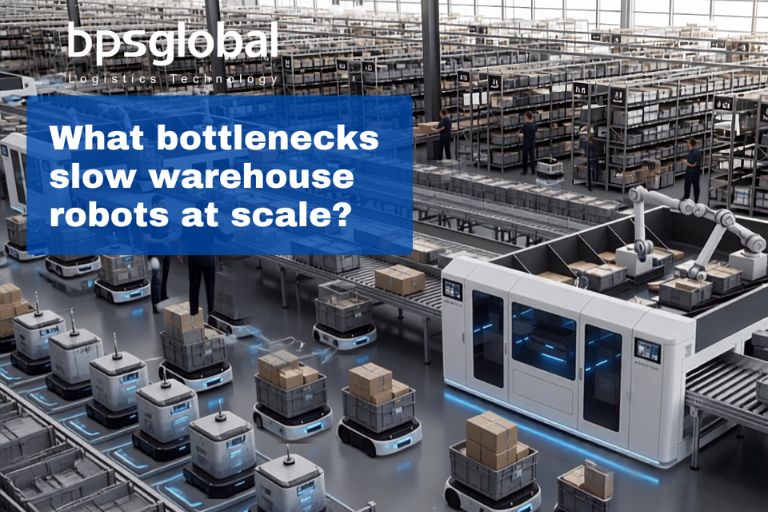
This is the pivotal stage where the commercial value of smart warehouse solutions truly shines. Enterprises begin deploying Autonomous Mobile Robots (AMRs), Automated Guided Vehicles (AGVs) or Four-Way Shuttles, completely overturning the traditional "person-to-goods" model with an efficient "Goods-to-Person" (G2P) paradigm shift.
In space-constrained Hong Kong warehouses, highly flexible mobile robotics offer significant advantages:
- Maximising Space Utilisation: Seamlessly navigating narrow aisles and leveraging vertical storage.
- Saving Up to 70% of Walking Time: Delivering racks or totes containing target items directly to workstation operators for centralized picking.
- High Deployment Flexibility: AMRs can be implemented in phases without requiring disruptive civil engineering works.
Level 4: Smart Logistics Ecosystem — 24/7 Autonomous "Dark Warehouses"
The pinnacle of warehouse automation is creating a 24/7, near-unmanned "dark warehouse" operational ecosystem.
- Automated Storage and Retrieval Systems (AS/RS) & High-Speed Stacker Cranes: Utilizing vertical heights of over a dozen meters to maximize floor space efficiency.
- AI Algorithms & Dynamic Slotting Optimisation: Systems utilise big data analysis to predict order trends and automatically relocate fast-moving goods closer to dispatch bays.
- Ultimate Cost Reduction: Drastically lowering per-square-meter operational costs while completely eliminating safety risks associated with high-altitude manual work.
Such top-tier solutions represent the ultimate upgrade benchmark for large multinational distributors, 3PL giants or enterprises with dedicated logistics parks.
How Should Enterprises Plan Their Automation Roadmap?
When planning a warehouse automation strategy in Hong Kong, enterprises should avoid blindly chasing top-tier automation or making impulse purchases. A professional logistics consultancy team evaluates four key parameters:
- Order Structure: SKU volume, seasonal fluctuations, and turnover velocity (ABC analysis).
- Facility Constraints: Clear ceiling height, floor loading capacity, and column grid spacing.
- Operational Bottlenecks: Is the primary challenge storage capacity, picking speed, or order error rates?
- Financial Evaluation: Targeted Return on Investment (ROI) timeframe and Capital Expenditure (CAPEX) budget.
The Most Pragmatic Upgrade Path: Perfect the WMS system foundation first, then incrementally deploy AMRs or shuttle systems in high-throughput operational bottleneck zones. This approach yields significant efficiency gains while minimizing capital expenditure pressures.
Case Study: Warehouse Transformation for a Major Local Retail Distributor
BPS Global Group assisted a prominent Fast-Moving Consumer Goods (FMCG) and retail distribution enterprise in Hong Kong with a comprehensive warehouse upgrade. Facing surging e-commerce orders, severe labor shortages and peak-season dispatch bottlenecks, our team designed a phased automation blueprint:
- Deployment of High-Density Four-Way Shuttle Storage Systems
- Construction of AS/RS High-Bay Automated Racking
- Integration of AMRs in Picking & Sorting Areas
Operational Outcomes:
- Storage capacity increased by approximately 150% (1.5x)
- Picking accuracy improved to 99.9%
- Significantly reduced manual walking distances, effectively smoothing peak-season operational spikes
Through structured, step-by-step automation deployment, the client not only dramatically enhanced current operational throughput but also created scalable capacity for future business growth.
BPS Global Group: Your Trusted Partner in Logistics Technology & Engineering Integration
Executing a warehouse automation upgrade is not simply buying equipment — it is a comprehensive engineering initiative involving mechanical and electrical design, System Integration, and operational workflow restructuring.
BPS Global Group brings decades of hands-on logistics automation experience across Hong Kong and the Asia-Pacific region. Our team of registered engineers and logistics technology consultants accurately diagnoses operational pain points to deliver end-to-end solutions — from feasibility studies and design to system integration and construction management.
Ready to optimise your warehouse operations? Whether you are currently exploring WMS implementation, AMR pilot projects or large-scale AS/RS installations, contact the BPS Global Group team today. Our engineering team can arrange an on-site evaluation to tailor the most cost-effective upgrade roadmap for your facility.