Warehouse Automation in Hong Kong: Technologies, Benefits and How to Choose the Right Solution
Most warehouse managers don't suddenly decide to invest in warehouse automation. It's usually something that's discussed after the same problems keep coming back. Orders take longer to pick than they did a year ago. Temporary workers become essential every peak season. Storage space starts disappearing as more SKUs are introduced. Forklifts spend more time waiting than moving, and overtime slowly becomes part of the normal routine. None of these issues appear overnight. They build up gradually until the warehouse reaches a point where existing processes struggle to keep up.
For many businesses in Hong Kong, moving to a larger warehouse is no longer the obvious answer. Industrial rents remain high, experienced warehouse staff are difficult to recruit, and customers expect faster deliveries regardless of order size. Adding another row of racking or bringing in more manpower may ease today's pressure, but it often creates another bottleneck a few months later.
That's one reason warehouse automation has become part of more boardroom discussions in recent years. The aim isn't simply to replace people with machines. It's to reduce repetitive work, shorten unnecessary product movement and make sure warehouse operations can continue to cope as order volumes grow.
Another change is that warehouse automation is no longer reserved for large multinational distribution centres. Businesses can now automate individual processes instead of redesigning the entire warehouse in one project. Some begin with conveyors to reduce manual transport. Others start with a WMS or AMRs to solve a specific operational problem before expanding further. The difficult part isn't deciding whether warehouse automation has value. It's deciding where to start.
One warehouse may benefit from better use of storage space, while another gains more from improving picking or internal product movement. Buying new equipment before understanding what's slowing the warehouse down often leads to disappointing results, even if the equipment performs exactly as specified.
Let's now look at what warehouse automation involves, the technologies commonly used in Hong Kong, and the factors worth reviewing before deciding where to invest.
Warehouse Automation - Not Just About Robots
When people hear the term warehouse automation, robots are usually the first thing that comes to mind. They're only one part of the picture. Warehouse automation can involve software, material handling equipment, storage systems and warehouse layout working together to move products more efficiently through the operation.
A typical project may combine conveyor systems, Autonomous Mobile Robots (AMRs), Automated Storage and Retrieval Systems (AS/RS), barcode scanning and a Warehouse Management System (WMS). Each serves a different purpose. Together, they reduce manual handling, improve inventory accuracy and keep products moving through the warehouse with fewer unnecessary steps.
Not every warehouse needs every technology
A business struggling with picking errors faces a very different challenge from one that's simply running out of storage space. The best approach depends on what's actually causing delays, not on which equipment happens to be the newest.
That's why two warehouses with almost identical floor areas can end up investing in completely different systems. One may need conveyors to reduce repeated product movement. Another may achieve better results by re-organising storage locations and introducing AMRs to cut down walking distance.
Review your operation first for more sustained results
Projects that continue delivering results usually have one thing in common. The warehouse operation is reviewed before anyone starts comparing equipment specifications.
The 3 Signs Your Warehouse May Be Ready for Automation
Not every warehouse needs automation straight away. However, if the following situations are becoming part of daily operations, it may be time to review whether the current way of working can continue supporting future demand.
1. Your team spends more time moving products than handling orders
One pattern appears in warehouse after warehouse. Pickers spend more time walking than picking. Employees may walk several kilometers during a shift collecting inventory or moving products between work areas. Each trip seems insignificant on its own, but together they consume a considerable amount of productive time.
Certain warehouse automation technologies reduce unnecessary travel by allowing products to move automatically between receiving, storage, picking and packing areas.
2. Storage capacity is becoming a daily problem
Running out of storage space doesn't automatically mean it's time to relocate. Many warehouses in Hong Kong still have unused vertical space, especially in older industrial buildings. Before looking for larger premises, it's worth reviewing whether better storage layouts, mezzanine floors or high-density storage systems could increase capacity within the existing warehouse.
3. Picking accuracy becomes harder to maintain
As SKU numbers grow, picking naturally becomes more demanding. Errors rarely happen because warehouse staff become less careful. More often, they're the result of longer picking routes, additional storage locations and increasingly complicated order profiles.
Introducing warehouse automation alongside WMS integration helps create a more consistent picking process while making inventory movements easier to track.
Do You Need to Automate the Entire Warehouse?
Many businesses start with a single area of the warehouse rather than trying to automate everything at once. That might mean installing conveyors between picking and packing stations or introducing a WMS before adding automated equipment. Once those improvements have settled into daily operations, the next phase becomes much easier to plan.
This phased approach is common in Hong Kong, where businesses often need to balance investment with day-to-day operations. Waiting until the warehouse reaches its limit usually leaves fewer options. Improving one process at a time is often easier to manage and far less disruptive.
It also gives management the opportunity to see what actually works. The benefits of each improvement become much clearer, making future investment decisions less about assumptions and more about operational evidence.
Common Warehouse Automation Technologies
Although warehouse automation includes many different technologies, most warehouse projects rely on a relatively small number of systems. Each solves a different problem, which is why two warehouses can invest in completely different equipment even if they occupy a similar amount of floor space.
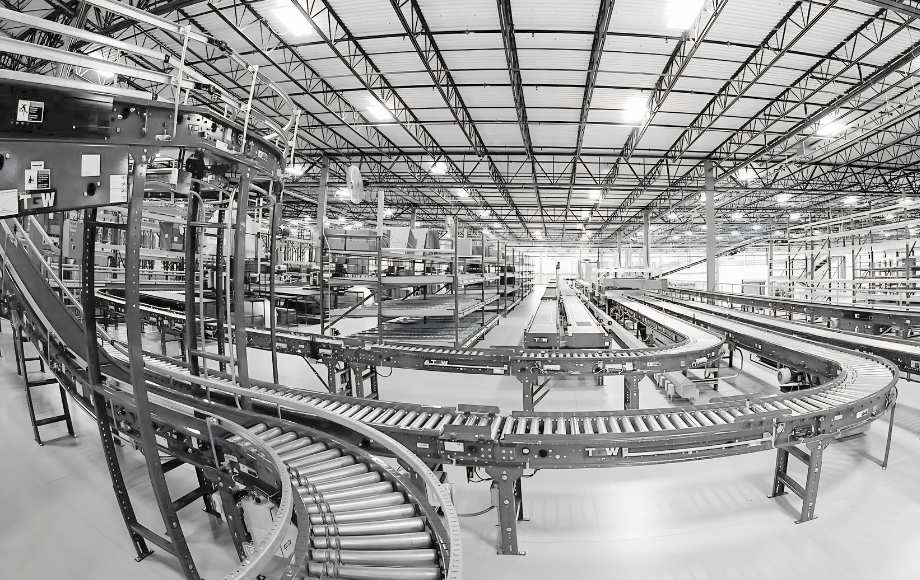
1. Conveyor Systems
These are often one of the first technologies introduced into an existing warehouse. The reason is straightforward. In many operations, products follow the same route every day, moving from receiving to storage, then on to picking, packing and dispatch.
Without these, that journey usually depends on forklifts, pallet trucks or warehouse staff. Individually, each movement only takes a few minutes. Across hundreds or thousands of orders, however, those extra trips quickly add up.
Automating that product movement allows employees to spend less time transporting goods and more time on picking, packing or quality checks. In warehouses where order volumes remain consistently high throughout the day, conveyors often deliver noticeable improvements without changing the overall warehouse process.
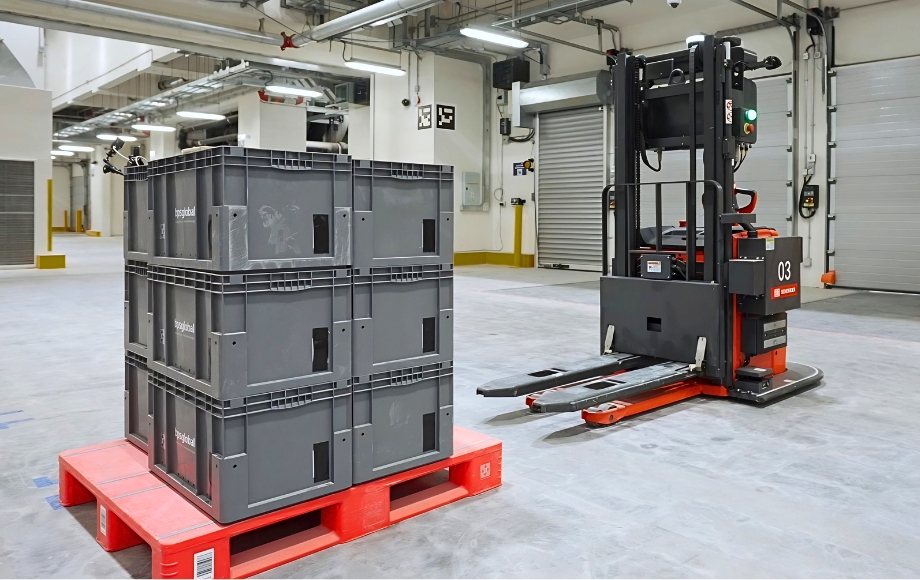
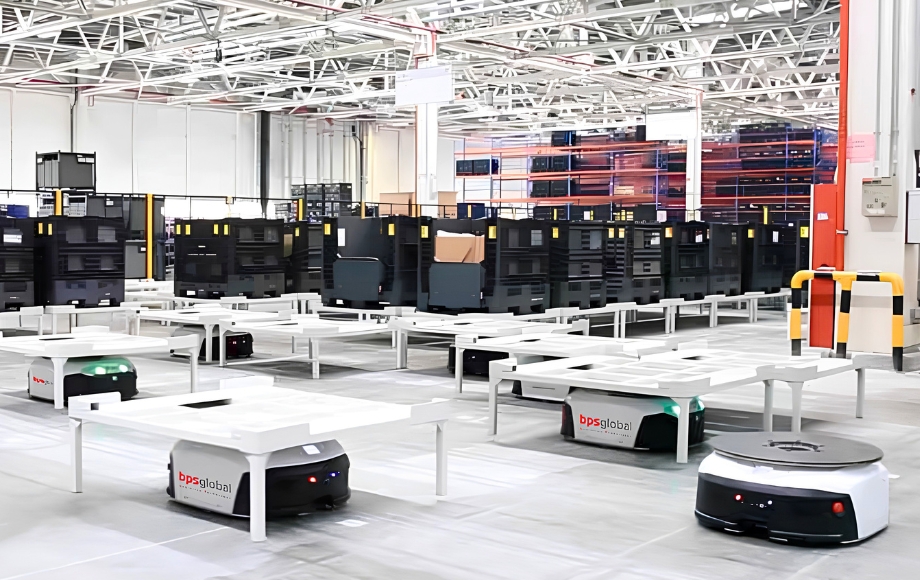
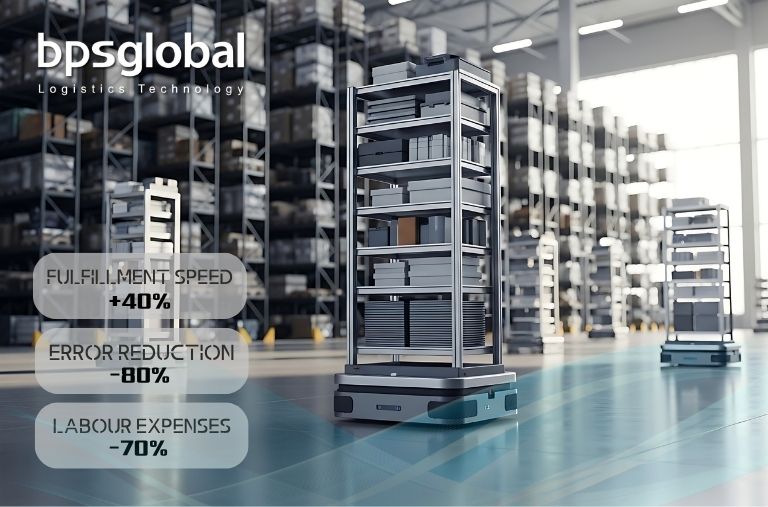
2. Autonomous Mobile Robots (AMRs)
These are becoming more common because warehouse operations rarely stay the same for long.
Storage locations change. Product ranges expand. Temporary work areas appear during peak seasons. Unlike traditional systems that depend on fixed routes, these types of robots can adjust their path as warehouse conditions change, making them easier to introduce into existing operations.
One of their most common applications is goods-to-person picking. Rather than having employees walk through multiple aisles collecting inventory, robots bring products to dedicated picking stations. In warehouses handling thousands of small orders every day, reducing walking distance often has a greater impact than increasing picking speed.
Another advantage is flexibility. As order volumes grow, adding more robots is usually simpler than redesigning an entire warehouse layout.
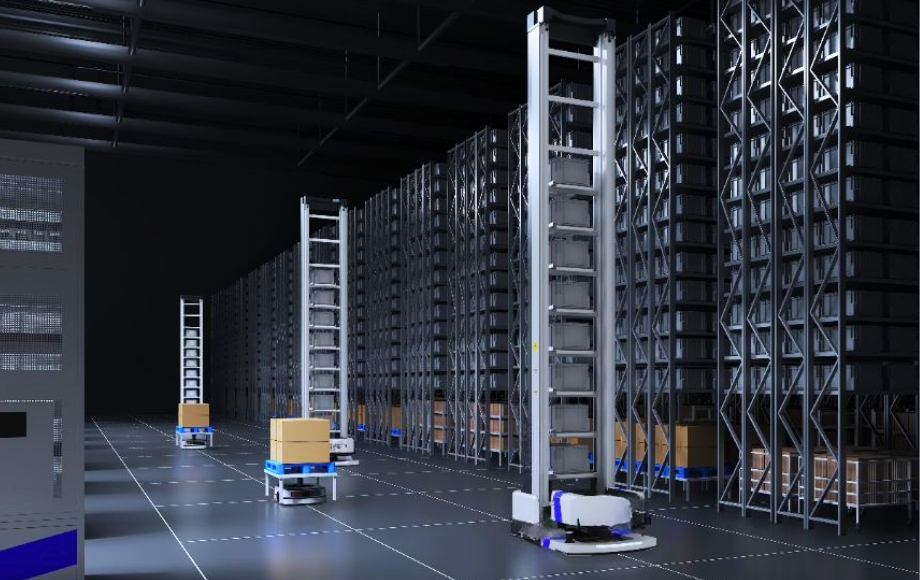
3. Automated Storage & Retrieval Solutions (AS/RS)
Warehouse space is expensive, particularly in Hong Kong. Once floor space begins to run out, expanding upwards often makes more sense than expanding outwards.
AS/RS is designed around that idea. Using stacker cranes, shuttle systems or similar equipment, products are stored within high-density racking and retrieved automatically when needed.
It's common to find warehouses with unused vertical space, especially in older industrial buildings. Making use of that height can significantly increase storage capacity without relocating to a larger facility.
Another benefit is consistency. Inventory locations remain accurately recorded, while unnecessary forklift movements are reduced because storage and retrieval follow predefined processes instead of manual judgement.
4. Mezzanine Systems
Not every warehouse improvement needs to involve robots or advanced automation.
Sometimes the biggest opportunity is already there — above the existing operation.
A mezzanine adds another working level inside the warehouse, creating additional space for storage, picking, packing or light assembly without increasing the building footprint.
This approach is particularly relevant in Hong Kong, where floor space is limited but ceiling height is often underused. When combined with other warehouse automation technologies such as conveyors or goods lifts, a mezzanine becomes part of the overall product flow rather than simply creating extra storage.
Technology Doesn't Fix Every Warehouse Problem
Warehouse equipment is often the first thing businesses start comparing. Ironically, it isn't always the first thing that needs attention.
A warehouse struggling with slow order fulfilment may assume more robots are needed. After reviewing the operation, the real cause is often much simpler. Products are stored in the wrong locations. Pickers walk further than necessary. Packing stations can't process completed orders quickly enough, creating queues upstream.
The same applies to storage capacity. Installing higher racking won't solve congestion if inventory is poorly organised from the beginning.
Projects that continue delivering value usually start somewhere less exciting. They begin by understanding how products move through the warehouse, where delays occur and which activities consume the most time every day. Equipment selection comes afterwards.
Planning Before Investing in Warehouse Automation
Buying equipment is usually the most visible part of a warehouse automation project, but it shouldn't be the starting point.
Assessing the current situation
Before comparing conveyors, robots or storage systems, it's worth taking a closer look at how the warehouse operates today. Questions about order volume, SKU profile, inventory turnover and storage utilisation often reveal where the biggest opportunities for improvement actually are.
Identify challenges
Every warehouse has its own bottleneck. One operation may simply need more storage capacity. Another loses time because pickers spend too long walking between locations. Others struggle with repeated manual handling or congestion around packing stations. Until those issues are identified, selecting warehouse automation equipment is largely guesswork.
Plan for the future
It's also worth thinking beyond today's workload. A warehouse processing 2,000 orders a day may be handling twice that number within a few years. Planning ahead makes it much easier to expand warehouse automation later without redesigning the warehouse every time demand increases.
Integration with other systems
Software deserves the same level of attention. Most warehouse automation equipment works alongside a WMS, WCS or ERP platform. If those systems exchange information smoothly, inventory stays accurate and different parts of the warehouse operate as one connected process instead of separate activities.
At the end of the day, the investment in warehouse automation isn't really about buying new equipment. It's about building warehouse processes that continue working well as the business becomes busier.
A Hong Kong Warehouse Automation Example — In Detail
A local e-commerce business operating a 40,000 sq.ft. warehouse in Kwai Chung had expanded steadily over several years. Sales continued to grow, but the warehouse itself had changed very little. Whenever more storage was needed, another row of shelving was added. Over time, walking distances became longer, picking routes became more complicated and space around the packing area gradually disappeared.
By the time peak season arrived, overtime had become routine. Picking was taking longer than before, not because staff were working more slowly, but because the warehouse had become harder to navigate as the number of SKUs increased.
The company didn't begin by replacing every warehouse process. Instead, it looked at where time was being lost each day. Storage locations were re-organised to reduce unnecessary travel, a mezzanine created additional operating space, and AMRs were introduced to support goods-to-person picking. Conveyor systems were added later to connect the picking, packing and dispatch areas once product flow became more predictable.
The changes weren't dramatic overnight, but they were noticeable. Staff spent less time moving between workstations, order processing became more consistent, picking accuracy reached 99.9%, and orders were processed 3x faster thanks to a more streamlined inventory flow.
The project also highlighted something that's seen in many warehouses. Warehouse automation isn't about installing as much equipment as possible. It's about solving the problems that slow the warehouse down first, then deciding which technologies genuinely add value.
Conclusion — Every Warehouse Automation Case is Unique
Some operations need more storage. Others lose time because products are handled too many times before dispatch, while some simply outgrow the layout that worked when the business was much smaller.
That's why there's no standard approach to warehouse automation. The same technology can produce very different results depending on how the warehouse operates.
For some businesses, re-organising storage locations or improving inventory control is enough to remove the biggest bottleneck. Others reach a stage where conveyors, or AMRs, become the logical next step. The important thing is understanding what the warehouse needs today while leaving room for future expansion.
One point is worth remembering. Automation doesn't have to happen all at once. Many businesses introduce warehouse automation gradually, improving one area at a time as order volumes increase and operational priorities change.
In the end, technology should fit the warehouse — not the other way around.
Learn More About Warehouse Automation – FAQs
1. What is warehouse automation?
Warehouse automation is the use of equipment, software and control systems to reduce manual handling and improve the movement of products within a warehouse. Depending on the operation, this may involve conveyors, robots, automated storage systems or warehouse management software.
2. Is warehouse automation only suitable for large companies?
Not anymore. Many SMEs begin with a single improvement, such as introducing a WMS, barcode scanning or one conveyor line. Additional technologies are often added later as order volumes increase and operational needs change.
3. How do I know if my warehouse is ready for automation?
If storage space is becoming difficult to manage, picking errors are increasing, labour is harder to recruit or overtime is becoming part of normal operations, it may be time to review whether current warehouse processes can continue supporting future demand.
4. What's the difference between AMRs and AGVs?
Both move products automatically, but they work differently. The former uses sensors and mapping technology to navigate around people and obstacles without following fixed routes. Traditional AGVs usually operate along predefined paths, making them better suited to more controlled environments.
5. Can warehouse automation work with my existing WMS?
In many cases, yes. Modern automation equipment is commonly integrated with WMS, WCS and ERP platforms so that inventory information remains consistent across different warehouse activities.
6. Will automation replace warehouse staff?
Usually not. Most businesses use warehouse automation to reduce repetitive tasks such as transporting products or travelling between storage locations. Warehouse staff can then focus on activities that still rely on human judgement, including picking, quality inspection and inventory control.
7. Do I need to automate the whole warehouse at once?
No. Many projects begin with a single area of the warehouse. Businesses often automate one process, review the results, then decide whether further investment is worthwhile. This approach reduces disruption while making future improvements easier to plan.
8. Which industries use warehouse automation most?
Warehouse automation is widely used in e-commerce, third-party logistics (3PL), retail distribution, manufacturing, food and beverage, pharmaceuticals and electronics. Any operation processing large numbers of products or customer orders can benefit if manual handling becomes a bottleneck.