Humanoid Robots Entering Warehouses: Opportunities and Transformation Mindsets for Hong Kong's Logistics Industry
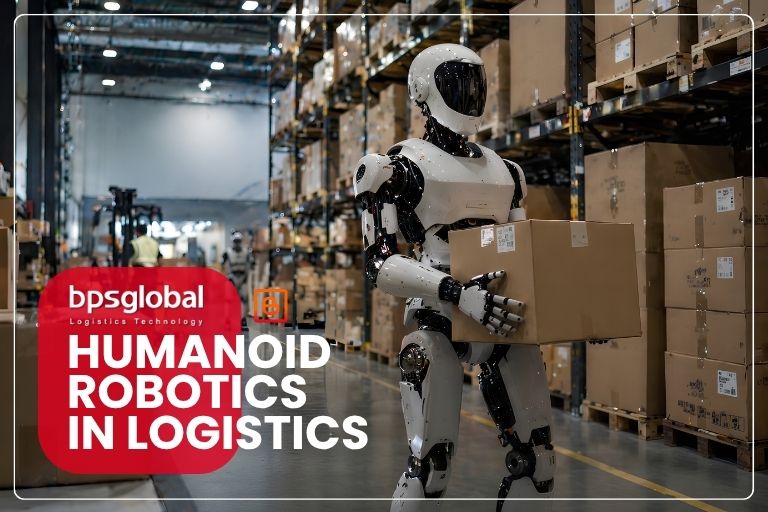
As humanoid robots gradually make their way into the logistics sector, emerging warehouse automation technologies are drawing widespread attention. For Hong Kong logistics enterprises, while new automation technologies are certainly worth noting, the core questions remain: Are humanoid robots genuinely suited to Hong Kong's warehouses and logistics centers? And can their introduction fully replace traditional automation equipment to achieve complete automation?
Humanoid Robots Reshaping the Logistics Industry
After years of technological development, the overall performance of humanoid robots has matured significantly. In November 2025, U.S.-based Agility Robotics announced that its humanoid robot, Digit, had moved over 100,000 totes at a logistics facility in Georgia, USA, primarily transferring totes from Autonomous Mobile Robots (AMRs) to conveyor belts.
While humanoid robots are already playing a role in specific warehouse positions, achieving full warehouse automation remains a long-term goal. Rather than blindly pursuing complete automation, enterprises at this stage should focus on safety, system stability, compatibility with existing workflows, and return on investment (ROI). A Reuters report from August 2026 also highlighted that China's humanoid robotics industry is undergoing a commercialization test, with market focus shifting toward practical productivity and commercial viability.
Advantages of Humanoid Robots and Workflow Alignment
The key selling point of humanoid robots lies in their human-like physical structure, allowing them, in theory, to perform various tasks within environments originally designed for humans. This offers a clear advantage in taking over highly repetitive and physically demanding tasks.
However, warehouse processes such as storage, transport, picking, sorting and loading/unloading each have distinct requirements regarding speed, load capacity and operational space. When promoting automation, enterprises should not use technological novelty as a benchmark. Instead, evaluating equipment efficiency and ROI based on actual process needs better serves a company's interests.
Building the Ideal Warehouse Automation Solution
Warehouse automation encompasses a diverse array of solutions, with humanoid robots being just one piece of the puzzle. Enterprises should flexibly integrate the following equipment and technologies based on their operational demands:
- Latent AMRs: Ideal for transporting target shelves/racks to picking stations within the warehouse.
- Vision-Guided Automated Forklifts: Well-suited for handling and storing goods stored at varying heights.
- Robotic Arms: Ideal for repetitive picking tasks within a designated workspace.
- Automated Storage and Retrieval Systems (AS/RS): Capable of expanding vertical storage space, making them perfect for warehouses requiring high-density storage.
Current Status of Hong Kong Logistics: A Preference for Gradual Automation Transformation
According to a Smart Logistics Awareness Survey conducted by The Chartered Institute of Logistics and Transport in Hong Kong (CILTHK) between September 2025 and January 2026 - which collected 201 questionnaires from industry professionals - nearly 40% of surveyed organisations have entered partial or major implementation phases of warehouse automation, while many others are in the planning or trial stages.
Among implemented smart logistics technologies, Warehouse Management Systems (WMS) boasted the highest adoption rate at 77.2%, followed by AS/RS (63.8%) and Latent AMRs (62.8%). This indicates that local enterprises favor a more pragmatic strategy - prioritising upgrades to WMS and mature automation equipment rather than directly deploying new humanoid robots.
Prioritising automation for time-consuming, highly repetitive, and high-risk occupational tasks can significantly boost operational efficiency. However, if a logistics center's operational workflows are not yet mature and stable, rushing into automation may fail to yield expected benefits and could even disrupt existing operations, impairing overall efficiency.
Positioning Humanoid Robots: Assistance First, Not Full Replacement
We believe positioning humanoid robots as "human assistance tools" is far more pragmatic and feasible than treating them as a "complete replacement solution."
Through a human-machine collaboration model - where AS/RS handles high-density storage, AMRs manage rack transport, frontline staff focus on tasks requiring human judgment and adaptability, and humanoid robots assist with repetitive tasks - enterprises can enhance operational safety and efficiency while easing labor shortage pressures.
Deploying targeted automation for specific workflows reduces the need for large-scale structural modifications to existing warehouses, allowing enterprises to adopt a phased approach based on business development and actual ROI.
BPS Global Group's Professional Team: On-Site Assessments for Warehouse Automation Needs
For Hong Kong logistics enterprises, a valuable investment is not about blindly chasing the "most advanced" robots, but choosing solutions that accurately resolve operational pain points. Warehouse automation transformation should begin with analysing on-site requirements, evaluating which processes need automation, selecting equipment tailored to real demands, and executing final system integration and deployment.
Leveraging extensive experience in warehouse automation, BPS Global offers end-to-end services including on-site surveys, solution design, automation planning, equipment installation and maintenance. We are committed to crafting automation solutions tailored to Hong Kong's operating environment to maximise equipment efficiency. Contact us today to schedule a free on-site inspection and automation solution consultation!