How Autonomous Mobile Robots (AMRs) Turn Warehouse Pressure Into Competitive Advantage
Retail supply chains are no longer judged only by cost per order. They are measured by speed, accuracy, resilience and the ability to scale without disrupting daily operations. For B2B retailers, wholesalers and omnichannel brands, order fulfilment has become a boardroom-level priority.
The Fulfilment Challenge is Structural
Modern retail operations must support e-commerce, wholesale accounts, store replenishment, marketplace orders and returns — often from the same inventory pool. As SKU counts grow and delivery expectations tighten, manual piece-picking becomes harder to sustain.
Common pressure points include:
- High labour dependency and rising recruitment costs
- Inconsistent picking accuracy during volume spikes
- Limited floor-space utilisation
- Difficulty coordinating online and offline demand
- Slow response to seasonal promotions and unexpected demand shifts
Mobile Robotics Changes the Operating Model
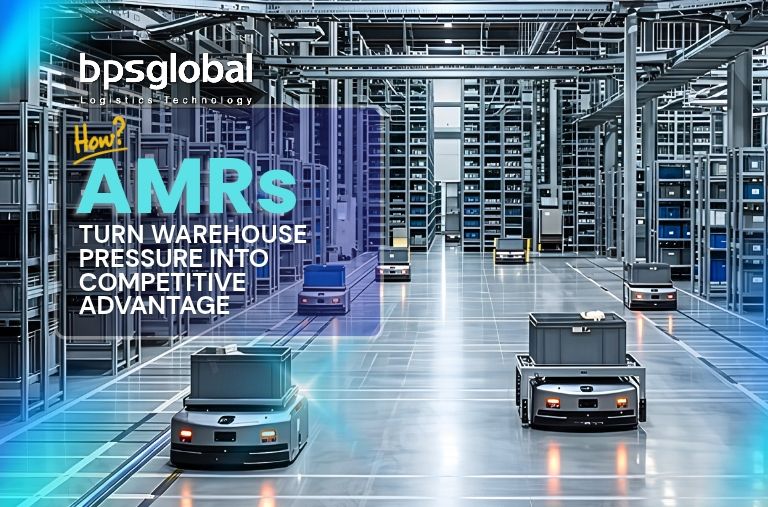
Instead of requiring staff to walk long distances across storage aisles, Autonomous Mobile Robot (AMR) systems bring inventory to the operator at a workstation. This “goods-to-person” approach reduces unnecessary travel, standardises workflows and allows teams to focus on higher-value tasks such as quality control, exception handling and customer service.
For B2B operations, the value extends beyond labour savings. A connected robotics platform can help standardise processes across multiple sites, improve inventory visibility and create a more predictable fulfilment cost base.
Built for Product Variety
Retail and wholesale inventories rarely fit a single handling profile. A fulfilment centre may manage small accessories, apparel, fragile goods, bulky items and promotional bundles at the same time.
A flexible automation strategy should therefore support:
- Multiple storage formats and carrier types
- Different picking methods for single-item and multi-item orders
- Dynamic slotting based on demand, seasonality or product velocity
- FIFO, batch and category-specific handling rules
- Consolidation workflows for mixed B2B and B2C orders
This flexibility helps reduce downstream sorting and consolidation work, which is often where fulfilment delays and errors accumulate.
Scale Without Overbuilding
Demand in retail is rarely linear. Promotions, new product launches, market expansion, and peak trading periods can create short-term capacity requirements that a fixed automation installation cannot easily absorb.
AMRs offer a modular path: businesses can begin with a defined picking zone or product category, validate performance, then expand robot fleets, workstations, and storage capacity as volumes grow. This phased approach helps align capital expenditure with actual business growth.
Resilience Becomes a Sales Advantage
For B2B customers, reliable fulfilment is not an internal metric — it is part of the customer promise. Late shipments, stock discrepancies, and inaccurate orders can damage account relationships and increase service costs.
Automated fulfilment systems can improve operational resilience by distributing workloads across robots and workstations, supporting rapid reconfiguration during disruption, and providing data that helps managers identify bottlenecks before they affect delivery.
From Automation Project to Growth Platform
The most successful automation programs are not simply technology purchases. They are operational transformations that connect warehouse execution, inventory planning, labour strategy, and customer experience.
For retail and B2B organisations preparing for the next stage of growth, the key question is no longer whether to automate, but how to automate in a way that preserves flexibility, protects investment, and strengthens service reliability.