2027 Warehouse Automation in Asia: Diverse Trends and Future Strategies
As e-commerce continues to expand and expectations for faster delivery rise, businesses across Asia are reassessing how their warehouses operate. In Hong Kong, this need is further intensified by labour shortages and rising land and operating costs.
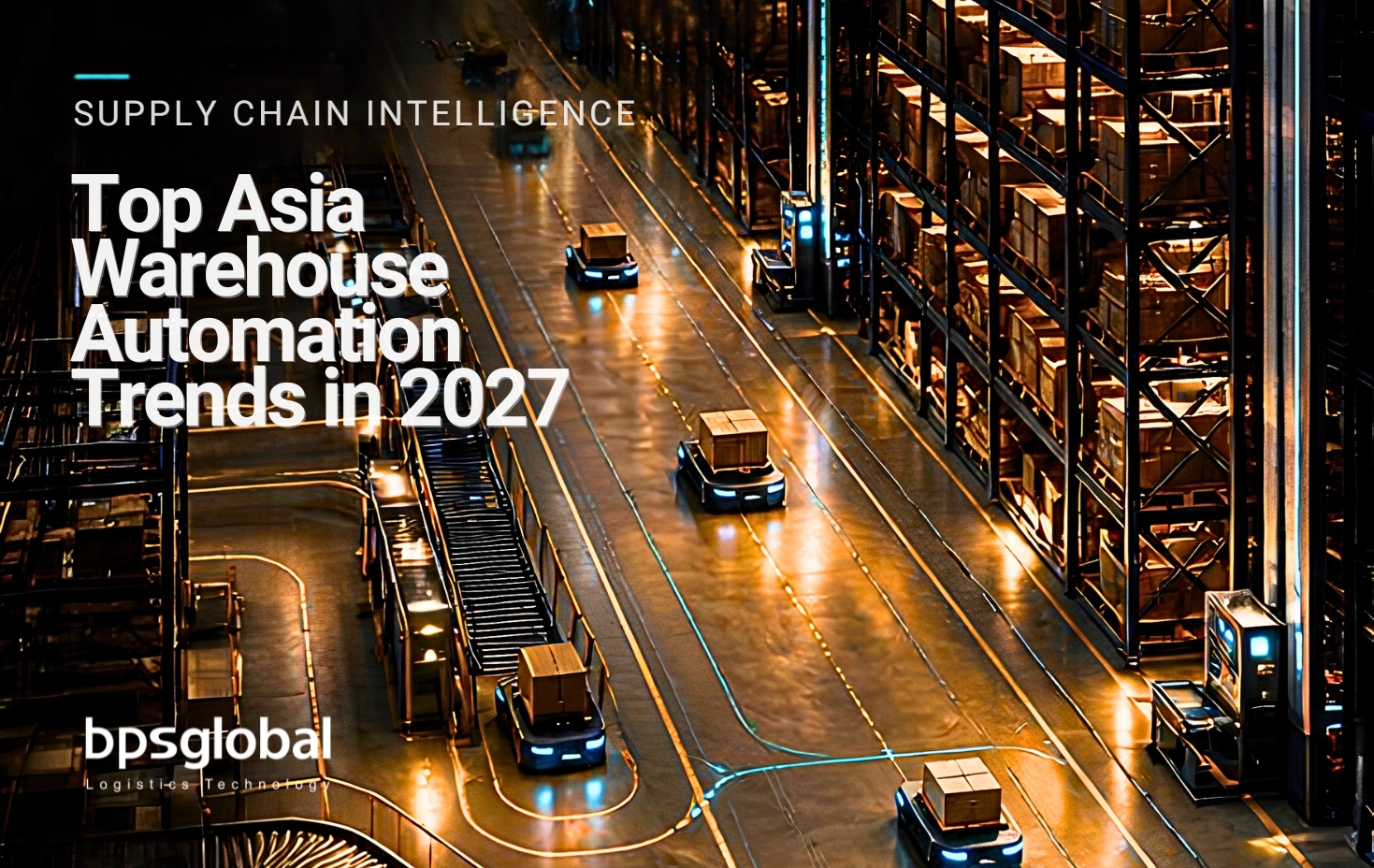
By 2027, the Asian logistics industry will be entering a new phase of accelerated transformation. Warehouse automation is no longer simply an option for improving efficiency. It is becoming an important strategy for businesses seeking to manage long-term operational pressures.
Accordingto data from the International Federation of Robotics (IFR), approximately 542,000 new industrial robots were installed worldwide in 2026, with Asia accounting for around 74% of the total. China, Japan, and South Korea remained among the world’s leading markets. Meanwhile, among the professional service robots recorded by the IFR, approximately 102,900 units were used for transportation and logistics applications in 2026, representing year-on-yeargrowth of 14%.
These figures reflect Asia’s increasingly mature foundation for robotics and automation. As we move into 2027, eight key trends are expected to shape the development of warehouse automation across the region.
Trend 1: AI-Powered Warehouses Move from Data Analysis to Operational Execution
Artificial intelligence is already being applied to demand forecasting, inventory management, and logistics planning. A 2026 report published by MHI and Deloitte found that 71% of surveyed supply chain organisations believed AI was having an impact on supply chain operations.
In 2027, the role of AI in warehouses is expected to move beyond data analysis and towards operational decision support. Its applications will increasingly include order prioritisation, inventory allocation and equipment scheduling.
When combined with a Warehouse Execution System (WES), AI can help businesses coordinate different automation technologies and workflows more effectively. This allows warehouse operations to respond more quickly to changing order volumes and operational requirements.
Over the longer term, an AI-powered warehouse will do more than generate reports and analytical insights. AI will increasingly participate in day-to-day operational decisions, helping businesses improve responsiveness and make better use of warehouse resources.
Trend 2: Autonomous Mobile Robots and VDA 5050 Break Down Equipment Barriers
The automated warehouse of the future will not necessarily rely on a single type of robot. Autonomous Mobile Robots (AMRs), Automated Guided Forklifts (AGFs), Robotic Arms, and Conveyor Systems can each perform different functions within a more flexible automation environment.
VDA5050 Version 3.0, released in 2026, further supports the integration of mobile robots from different manufacturers under a common control architecture, enabling them to operate as part of a mixed fleet.
As the range of automated equipment within warehouses expands, interoperability between systems will become increasingly important.
When evaluating an automation solution, businesses should therefore consider morethan the performance of individual machines. System compatibility, dataexchange capabilities, and future scalability should also form part of the assessment. This can help reduce the operational risks associated with excessive dependence on a single technology vendor.
Trend 3: AI Vision AdvancesAutomated Picking Systems
Compared with the movement of goods along fixed and predictable routes, picking mixed SKUs with different shapes, dimensions, and packaging characteristics remins one of the most challenging areas of warehouse automation.
As AI vision and 3D perception technologies continue to develop, Automated Picking Systems are becoming better able to identify the position, shape, and orientation of individual products. They can then select an appropriate gripping method according to the physical characteristics and positioning of each item.
These capabilities can improve picking accuracy while reducing reliance on manual handling in warehouses with large and diverse product ranges.
In the coming years, intelligent robotic picking is expected to gain wider adoption in e-commerce, retail, healthcare, and other warehouse environments that handle a high number of SKUs. This will allow warehouse robots to progress from simply transporting goods to performing more flexible and complex picking tasks.
Trend 4: High-Density Automated Storage and Retrieval Systems Make Better Use of Vertical Space
Limitedl and and warehouse space remain common challenges in many Asian cities. Increasing storage capacity per square metre will therefore continue to be an important consideration when businesses plan automated warehouse facilities.
For example, Maersk openeda new logistics centre in Singapore in 2026 with a total area of approximately 1.1 million square feet. The facility integrates Automated Storage and Retrieval Systems (ASRS), Pallet Shuttle systems, and autonomous material-handling equipment.
The project demonstrates how large logistics facilities are moving towardshigher-density storage and closer integration between multiple automation systems.
In the future, warehouse planning will focus on more than the amount of floorspace required. Businesses will place greater emphasis on using vertical space effectively to improve storage density, handling capacity, and overall operational efficiency within a limited footprint.
Trend 5: Phased Automation and RaaS Reduce the Initial Investment Barrier
Not every business is suited to implementing a large-scale, fully automated warehouse in a single project.
For many organisations, a more flexible approach is to introduce automation first at major operational bottlenecks, such as material movement, picking, or sorting, and then expand the system gradually as business requirements grow.
Robotics-as-a-Service, or RaaS, can also help reduce the initial investment required to introduce robotic technology. It allows businesses to test and deploy automation solutions through a more flexible commercial model.
For small and medium-sized enterprises, as well as businesses retrofitting existing warehouses, a practical strategy will often be to address the most immediate operational problem first and then expand the system in stages.
This approach also enables businesses to use actual operational data to validate the expected return on investment and determine the most appropriate direction forfuture expansion.
Trend 6: Digital Twins Enter Practical Engineering Applications
Warehouse automation projects involve extensive equipment configuration, facility layout planning, and process design. If operational issues are identified only after a system has been commissioned, additional modifications may be required, potentially increasing costs and delaying the project.
Digital twin technology allows businesses to simulate warehouse layouts, logistics processes, and equipment operations in a virtual environment before physical deployment begins. This can help project teams identify potential problems and operational bottlenecks at an earlier stage.
In 2026, Siemens and KION announced a collaboration combining AI, simulationtechnology, and digital twins for the design and optimisation of logistics centres.
As these technologies mature, simulation-based evaluation is expected to become amore common part of warehouse automation planning. It can help businesses reduce the cost of trial and error while lowering overall project risk.
Trend 7: Micro-Fulfilment Centres Bring Automation Closer to Consumers
Growing demand for faster delivery is changing the structure of logistics networks.
In addition to conventional large-scale distribution centres, businesses are establishing smaller automated fulfilment nodes closer to urban areas and end consumers. These facilities can shorten delivery distances and improve service speed.
For example, Amazon announced in 2026 that it would expand its network of Urban Fulfilment Centres and Micro-Fulfilment Centres in India. This reflects a broader shift towards multi-node logistics networks designed around shorter delivery distances.
For densely populated Asian cities, micro-fulfilment centres could become an important complement to larger distribution centres. They may help businesse sachieve a more effective balance between delivery speed, inventory allocation and operating costs.
Trend 8: Energy Efficiency and ESG Carbon Metrics Become Part of Automation Design
The performance of a smart warehouse will no longer be evaluated solely accordingto throughput and labour savings.
Energy consumption, carbon emissions, and long-term operating costs will receive increasing attention when businesses assess warehouse automation investments.
PSA Supply Chain Hub @ Tuasin Singapore is expected to commence operations in 2027. The facility is planned to incorporate Automated Storage and Retrieval Systems (ASRS), automated logistics technologies, renewable energy and energy-efficient design. It illustrates how warehouse automation and energy management arebecoming more closely integrated.
When planning future automation systems, businesses will need to consider not only equipment efficiency and return on investment, but also energy performance,carbon emissions and wider sustainability objectives.
Systems with built-in energy monitoring and optimisation capabilities will be better positioned to help businesses respond to stricter environmental requirementswhile managing long-term operating costs.
2027: Warehouse Automation Moves from Equipment Upgrades to System-WideTransformation
Warehouse automation in 2027 will not simply involve purchasing more equipment. The focus will move from improving the performance of individual machines towards optimising the entire logistics system.
From AI-driven scheduling and mixed robotic fleets to high-density automated storage, digital twins and phased deployment, these trends point in the same direction. Businesses will need logistics systems that are more flexible, scalable and capable of continuous optimisation.
Asa result, the evaluation of warehouse automation solutions will become morecomprehensive.
Inaddition to processing speed, labour costs, and return on investment,businesses will need to assess:
- System compatibility
- Scalability
- Spaceutilisation
- Energy efficiency
- Data integration
Implementationcomplexity
For Asian logistics businesses, automation does not necessarily mean building a fully automated warehouse in a single step.
A more practical approach is to evaluate actual business requirements, warehouse conditions, and investment budgets, and then introduce suitable automation technologies in phases. This allows organisations to build logistics systemsthat can continue to evolve as their operational needs change.
Start Planning Your Warehouse Upgrade Today
The competitiveness of a future-ready automation solution will depend on more than the performance of any individual machine. The real value lies in how effectively the technology, warehouse design and operational processes work together.
If you are evaluating an automation upgrade for your factory or warehouse, or would like to understand how Autonomous Mobile Robots (AMRs) and Automated Storage and Retrieval Systems(ASRS) can be introduced in phases, contact the professional consulting team at BPS Logistics Technology.
Our team can provide tailored automation recommendations, return-on-investment assessments, and warehouse layout planning to help you develop an upgrade strategy that reflects your operational requirements and business objectives.
Sources & Further Reading
- International Federation of Robotics (IFR). (2025). World Robotics 2025 Report – Industrial Robots.
- International Federation of Robotics (IFR). (2025). World Robotics 2025 Report – Service Robots.
- MHI & Deloitte. (2026). 2026 MHI Annual Industry Report.
- German Association of the Automotive Industry (VDA). 2026). VDA 5050 Version 3.0 Release.
- Maersk. (2026). Maersk Boosts Asia Pacific Logistics Footprint with New Fully Automated Global and Regional Distribution Centre in Singapore.
- Siemens. (2026). Siemens and KION Partner to Shape the Supply Chains of the Future.
- Amazon. (2026). Amazon Doubles Down on Expansion of Amazon Now.
- PSA Singapore. (2026/2027). PSA Celebrates Groundbreaking for its New Supply Chain Hub.